Arab Network of National Human Rights Institutions Holds Meetings of the Executive Committee and the General Assembly
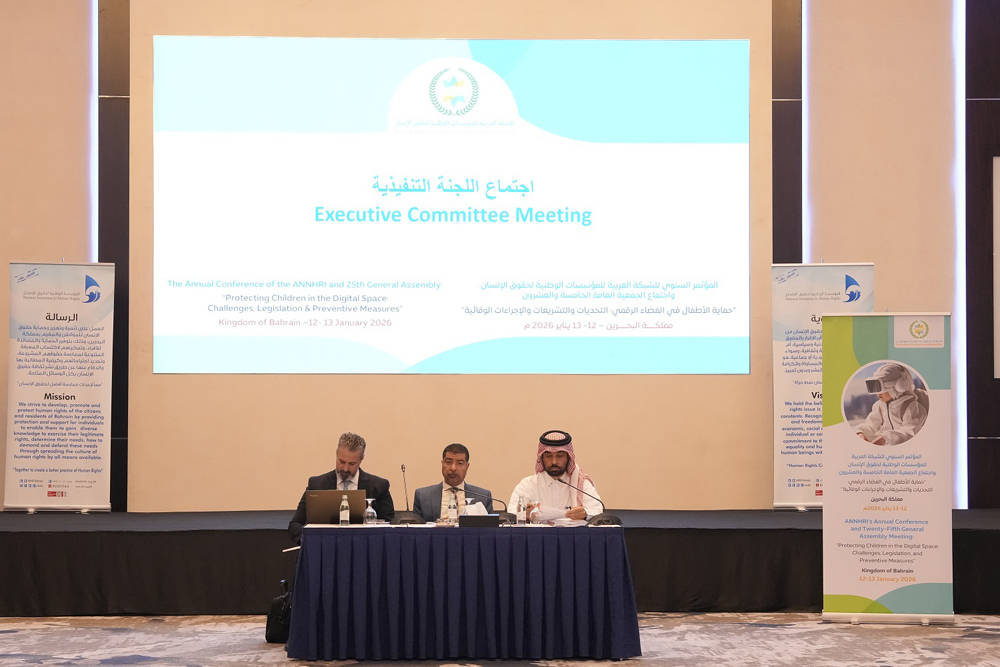
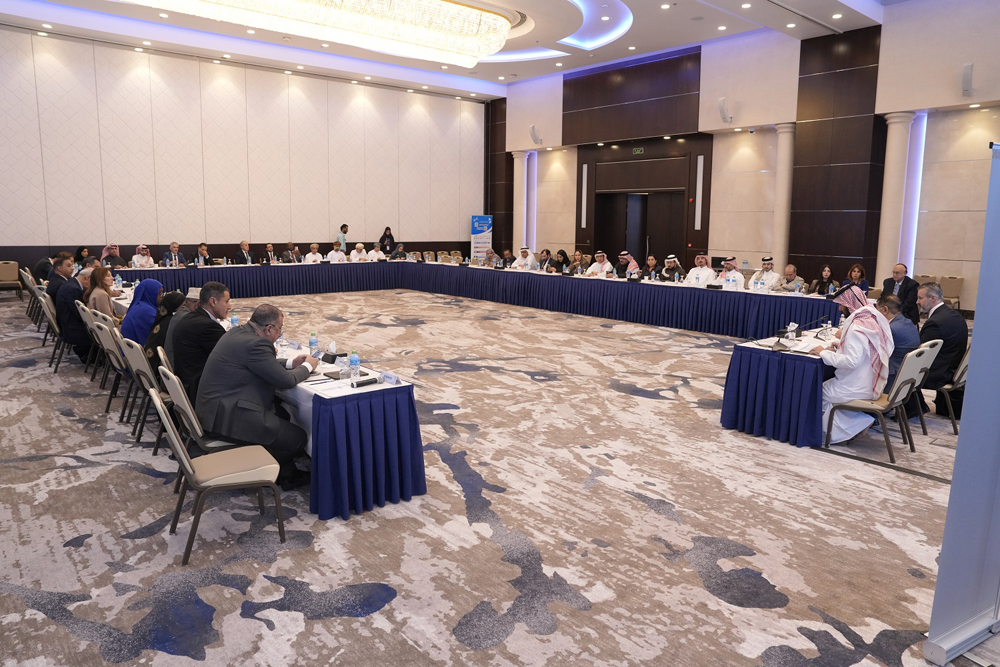
The Arab Network of National Human Rights Institutions convened, on Tuesday, 13 January 2026, meetings of the Executive Committee and the Twenty-Fifth General Assembly, with the participation of heads and representatives of member national institutions, and in the presence of the Network’s General Secretariat.
The meetings discussed and approved a number of agenda items, most notably the adoption of the General Assembly agenda, review and approval of the Network’s 2024 Annual Report, and presentation of the financial report, in addition to follow-up on membership subscription fees. Participants also discussed the recommendations of the approved committees and the Network’s conference recommendations, particularly those related to the protection of children’s rights in the digital space. The meetings further reviewed updates to the Network’s 2025 Action Plan, discussed mechanisms to support national institutions facing various challenges, addressed matters related to the accreditation process with the Accreditation Committee, and explored ways to strengthen cooperation with relevant regional and international partners. In addition, the Network’s 2026 work programs were discussed, and proposed activities to be implemented during the coming period were approved.
The General Assembly also reviewed the outcomes of the Executive Committee meeting and discussed a number of organizational and administrative matters, contributing to enhanced efficiency and effectiveness of the Network’s institutional performance.
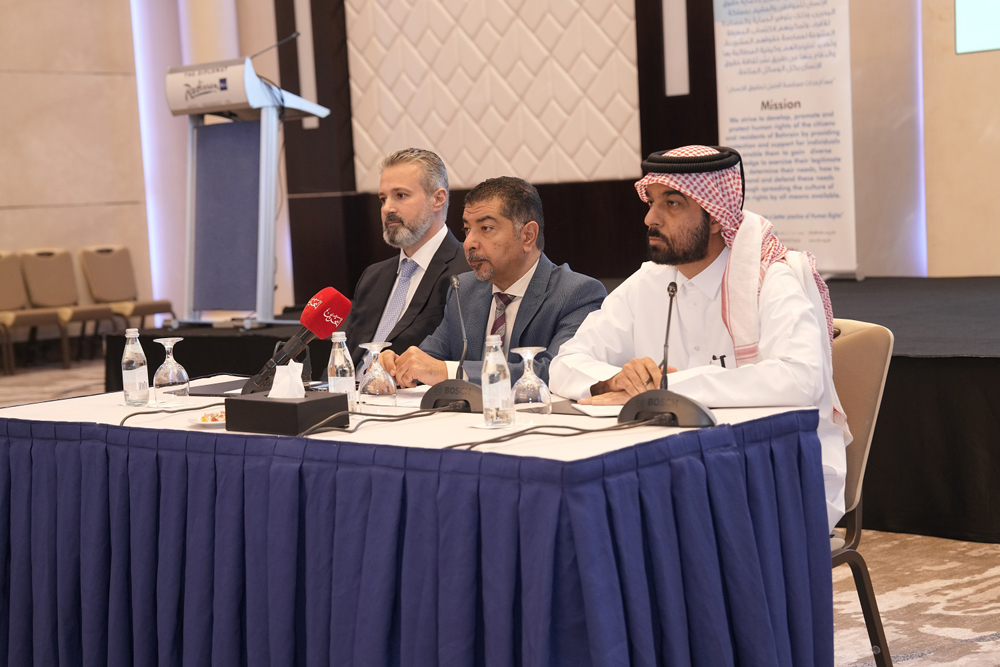
Following the conclusion of the meetings, a press conference was held with the participation of Eng. Ali Ahmed Alderazi, Chairperson of the National Institution for Human Rights (NIHR) and Chair of the Arab Network of National Human Rights Institutions. He affirmed that, through its presidency of the Arab Network, the Institution will work to develop the Network’s operational mechanisms and strengthen its regional and international presence. He also highlighted ongoing efforts to support Arab national institutions in obtaining international accreditation from the Global Alliance of National Human Rights Institutions, thereby enhancing their efficiency and independence.
Al-Derazi explained that protecting children in the digital space requires innovative responses to address emerging challenges such as cyberbullying and online blackmail. He highlighted the efforts of the Child Rights Commissioner, particularly through field visits to schools and the “Friends of the Child Commissioner” program aimed at promoting a culture of protection. He emphasized that legislation alone is insufficient without building preventive awareness among children and families, noting that the family represents the first line of defense. He reaffirmed the NIHR’s commitment, through its presidency of the Arab Network, to strengthening the protection of children’s rights and developing frameworks for Arab and international cooperation in this field.
During the press conference, the key outcomes of the meetings were presented, and questions from members of the press and media were addressed, in line with principles of transparency and engagement with public opinion. The Network also reaffirmed its commitment to continuing to strengthen joint Arab action in the field of human rights protection and promotion, and to supporting the role of member national institutions in accordance with international standards and best human rights practices.
At the conclusion of the conference, Sultan Al‑Jamali, Secretary-General of the Arab Network of National Human Rights Institutions, expressed his thanks and appreciation to the organizers and participants, commending the role played by the National Institution for Human Rights in the Kingdom of Bahrain in ensuring the success of the event and facilitating the participation of Arab delegations. He noted that the rapid evolution of the digital world has brought about a fundamental transformation across all aspects of life, necessitating a deeper understanding of this transformation, the development of electronic regulatory tools, and the enhancement of digital awareness. He stressed the importance of investing in digital communities—particularly those directed at children—as a priority to ensure a safe digital future and to strengthen joint Arab cooperation.